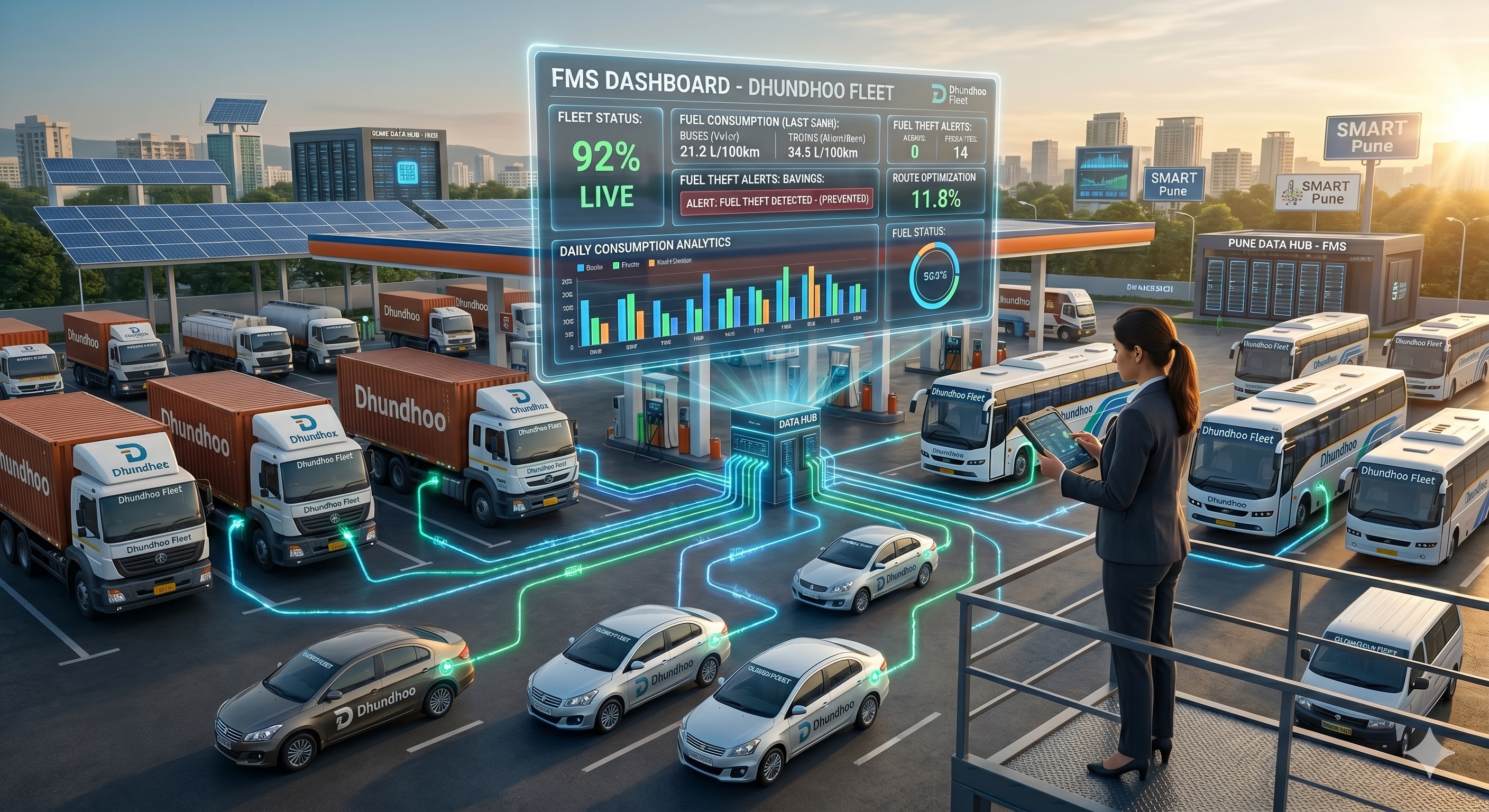
Generator fuel monitoring for sites & plants
DG Set Fuel Tracking
Diesel generator sets power batching plants, camps and remote work fronts, and burn a lot of fuel with very little oversight. Dhundhoo monitors fuel level, consumption and running hours for every DG set, and alerts you to theft the moment it happens.
On a construction project, DG sets often run unattended for long hours and are refuelled from drums or tankers with manual registers. That is an open invitation to pilferage and inflated consumption claims. Dhundhoo pairs fuel-level sensors with a GPS and telemetry unit on each DG set, giving you tank-level, refill and drain events, running hours and kVA-load-linked consumption in one dashboard.
The Problem & The Answer
Challenges We Solve
Industry Challenges
Fuel Pilferage
Diesel siphoned from DG set tanks or drums at night is hard to prove with manual registers. Small, repeated losses add up to lakhs over a project.
Unverified Consumption
Site teams report litres used, but there is no independent check against running hours or load. Over-claims go unnoticed until budget review.
Unattended Running
Generators left running at no load, or after shifts end, burn fuel for nothing. Operators rarely log start and stop times accurately.
Scattered Assets
DG sets move between work fronts, camps and plants. Teams lose track of which set is where, and which one needs refuelling or service.
Dhundhoo Solutions
Tank-Level Monitoring
Live litres in tankFuel-level sensors measure the tank continuously and report litres remaining, so you always know when a set needs a refill before it trips.
Theft & Drain Alerts
Instant theft alertsA sudden drop in tank level while the engine is off triggers an instant alert with time and quantity. Refill events are logged with litres added.
Consumption Analytics
Litres per hourLitres per running hour for each DG set, compared against its rated norm. Spot inefficient sets, leaks and over-claimed fuel at a glance.
Run-Hour & Load Tracking
Auto run-hour logsEngine on/off status and running hours are recorded automatically, with optional electrical-parameter inputs to link fuel use to actual load.
Simple Deployment
How It Works
From first contact to full deployment in as little as 48 hours.
Tank & Set Assessment
We check the tank shape and size of each DG set and pick a suitable fuel-level sensor and tracker. Calibration data is captured for accurate litre readings.
Sensor & Tracker Installation
A fuel sensor is fitted in the tank and wired to a tracker with engine-on input. The unit is sealed to resist tampering.
Calibrate & Set Alerts
Tank calibration, theft thresholds, low-fuel levels and expected litres-per-hour norms are configured for each set.
Review Reports
Site engineers and accounts see daily fuel reports with refills, consumption and exceptions. Anything unusual is flagged automatically.
Built for DG Set Fuel Tracking
Key Platform Features
Fuel-Level Sensors
Capacitive or ultrasonic sensors suited to DG set tanks, with calibration per tank.
Refill & Drain Log
Every fill and drain event recorded with time, litres and location.
Low-Fuel Alerts
Notify the site team before a generator runs dry and stops a plant or camp.
Norm vs Actual Report
Compare each set's consumption against expected litres per running hour.
Multi-Site Dashboard
All DG sets across all projects on a single screen, grouped by site.
Export for Accounts
Fuel reports in Excel and PDF formats ready for reconciliation with purchase records.
Real-World Applications
Common Use Cases
Batching & Crushing Plants
Keep track of fuel into large DG sets that feed batching plants, crushers and asphalt units, where a single day of pilferage can be costly.
Labour Camps & Site Offices
Monitor generators at camps and offices to see actual running hours and stop unattended running.
Rental DG Sets
Power-rental firms bill customers on verified run-hours and fuel used, and know instantly if a hired set is tampered with.